If you are a larger guy and you have ever struggled with jeans that either cut into your stomach or slide down your hips, you are not alone. Knowing how jeans should fit on the waist for larger men can save you from wasted money and daily discomfort. I have worked retail floors at Gap and Levi’s, and I have helped dozens of guys find that sweet spot between a pinch and a sag. The short version: your jeans should sit at your natural waist without gaping at the back or squeezing your gut. They should not require a belt to stay up, but a belt should not feel like a tourniquet either. Let me walk you through what to look for next time you shop.
The Two Biggest Waist Fit Problems Larger Guys Face
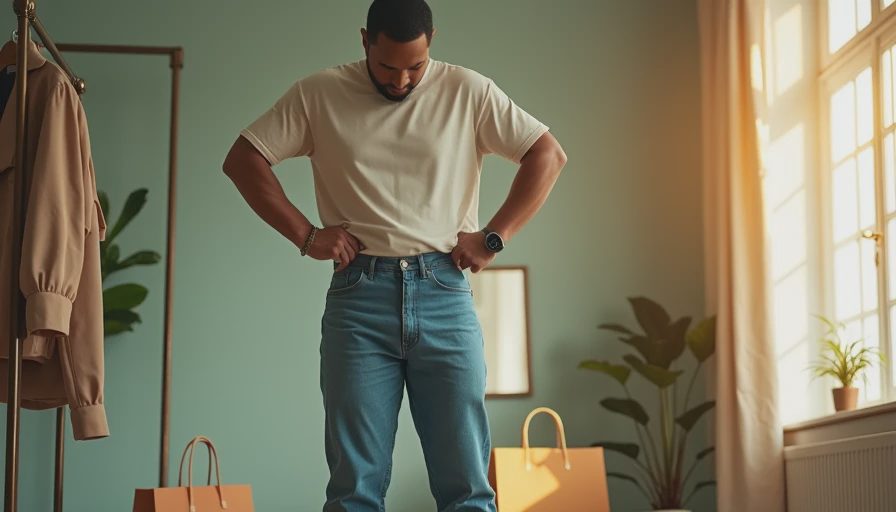
Most fit issues come down to two mistakes: buying jeans with too low a rise (the distance from crotch to waistband) or relying on a belt to fix a too-big waistband. Low-rise jeans sit below the belly, which creates a dreaded muffin top and constant pulling. For larger men, a mid-rise or high-rise jean is almost always the better choice. The waistband should rest at your natural waist—about an inch above your belly button—not halfway down your hips. When you squat or sit, the waistband should stay put without digging in. If you have to constantly yank them up, the rise is too low or the waist is too big.
The second problem is buying a waist size that is too big and relying on a cinched belt. That creates bunching fabric around the waistband and a sloppy silhouette. Instead, get a waist that fits snugly without a belt—you should be able to slide two fingers between the waistband and your skin, no more. A belt then becomes an accent, not a crutch.
How to Find the Right Rise and Waistband
When you grab a pair of jeans off the rack, look at the tag for the rise measurement. For a larger man, aim for a rise of at least 10 to 11 inches. Many straight or relaxed cuts from brands like Levi’s (try their 501 or 541 Athletic Fit) or Wrangler offer that rise naturally. If the jeans sit low, put them back. Also check the back rise—it should curve slightly to cover your rear without a gap. Gap between the waistband and your back is a sign the jeans are too straight-cut for your shape. In that case, look for a “curved” or “athletic” fit that accommodates a wider seat without a giant waist.
Waistband material matters too. Raw denim and stiff 100% cotton jeans will not give much at the waist; they break in over time but start tight. If you want immediate comfort, look for jeans with a touch of stretch (1-2% elastane). That little give lets the waistband hug your body without cutting off circulation. Many budget brands like Old Navy or Gap offer stretch denim that still looks classic.
The Belt Test and Real-World Fit Check
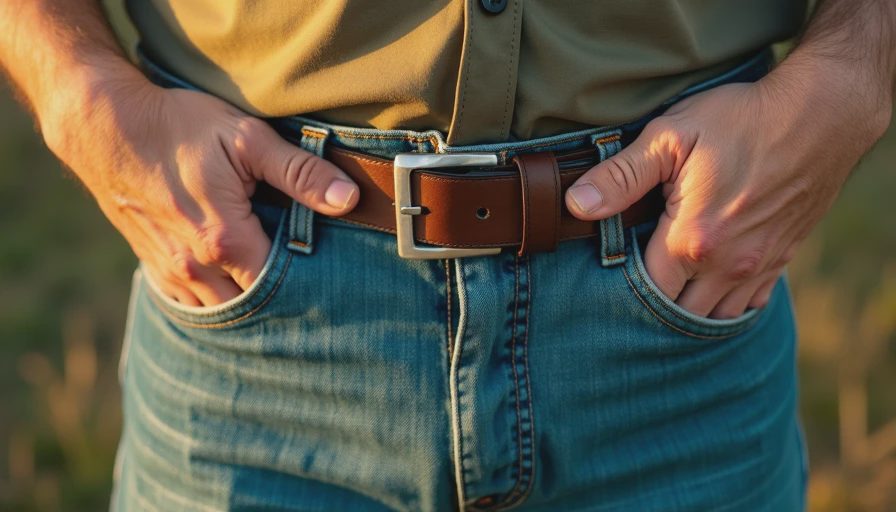
Before you buy, run through a quick belt test. Put on the jeans and fasten them without a belt. The waistband should be snug—not so tight that you cannot breathe, but not loose enough to slide down when you walk. Walk to the mirror, sit down, bend over. If the back of the waistband drops more than an inch, the rise is too low or the waist is too big. If the front digs into your stomach, try a size up or a higher rise.
Once you find a good fit, try them with your usual belt. The belt should not cinch more than an inch of extra waistband fabric. If you have to pull the belt past the second hole to keep them up, the waist is too big. A properly fitting pair of jeans will stay up with the belt loosely fastened—the belt is mostly for looks and to keep your shirt tucked neatly.
My Go-To Stores and Styles for Larger Men
I have seen which brands and cuts work best for larger guys on a budget. Levi’s 541 Athletic Fit is a solid starting point because it gives extra room in the seat and thigh without a giant waist. Target’s Goodfellow & Co. brand has a “Athletic” taper that fits well and costs around $30. For bigger guys who want a classic straight leg, Wrangler’s regular fit jeans are affordable and come in waist sizes up to 48. J.Crew Factory’s 770 and 1040 cuts also offer a mid-rise that works for larger builds—wait for their 40–50% off sales to grab a pair for $35.
Remember, the number on the tag is just a starting point. Different brands cut waists slightly differently. Do not get attached to a number; get attached to how the jeans feel when you move.
Final Fit Formula
Here is the takeaway for how jeans should fit on the waist for larger men: choose a mid-rise or high-rise (10+ inches front rise), get a waist that fits snugly without a belt (two-finger rule), and look for a cut that matches your body shape (relaxed or athletic fit). A belt is for style, not emergency suspension. Once you dial in that fit, you will actually look forward to wearing jeans—and you will save yourself the hassle of constant adjustments. Spend less. Dress better.
If you are still unsure, take a pair of jeans you already own that almost fit, note what is wrong, and bring that knowledge to the fitting room. Most retail stores have multiple sizes and cuts to try. Give yourself 15 minutes to find a pair that checks every box. Your waist—and your confidence—will thank you.
Travellers Write
No letters yet — be the first traveller to write.